


Getting the Heat Right in Your Bathroom
When you’re picking out an IP65 infrared heater, your first instinct might be to just go for the biggest wattage available. But here’s the thing: more power isn’t always better. It’s really about finding that sweet spot where the room feels cozy without wasting electricity or creating weird hot and cold zones.
Let’s talk about room size
Infrared is different because it heats you and the walls, not the air. If you’ve got a tiny bathroom—think under 4m²—a 400W to 600W lamp is usually plenty. If you put a monster heater in a tiny space, it gets too hot too fast. The thermostat will just keep clicking on and off every few seconds, which is a great way to burn out your relays way sooner than they should. For those medium-sized bathrooms (between 4m² and 8m²), you’ll probably want something in the 800W to 1000W range. And if you have a massive master bath? Don’t just buy one giant lamp. You’ll end up with one spot that feels like a sauna and another that’s still freezing. Instead, scatter a few lower-wattage lamps around the room. It spreads the warmth much more evenly.
The deal with IP65 and heat
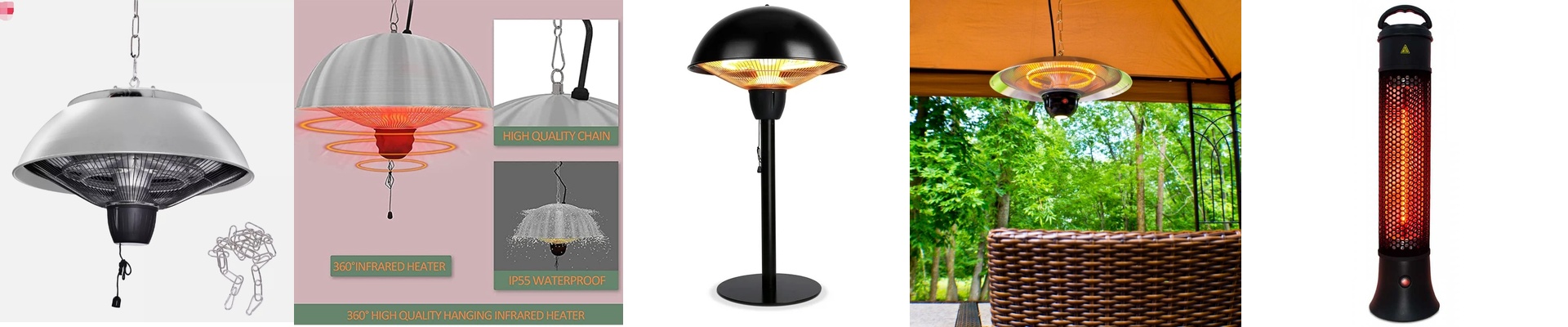
That IP65 rating is great because it means your heater can handle dust and splashes of water. But those seals that keep the water out also trap heat around the base of the lamp. This is where you have to be careful with your wiring. Higher wattage means more current. If you shove a 1200W lamp into a cheap housing, you might actually melt the plastic gaskets over time. It’s not a “day one” problem, but it’s a “six months from now” disaster. Just make sure your junction box and wiring can actually handle the load.
Balancing power and your wallet
Sure, higher wattage gets the room warm faster. But it also puts a huge spike on your electrical panel. If you’re doing a bigger project—like wiring up several bathrooms in a commercial building—it’s way smarter to use a few 600W lamps across different points. It’s much easier on your breakers than trying to run a couple of 1500W beasts. Plus, there’s a little secret: low-wattage lamps tend to live longer. They run for longer stretches but pull less current, which is much kinder to the filament. Just double-check your circuit capacity before you start drilling holes in the wall. Your breaker will thank you.