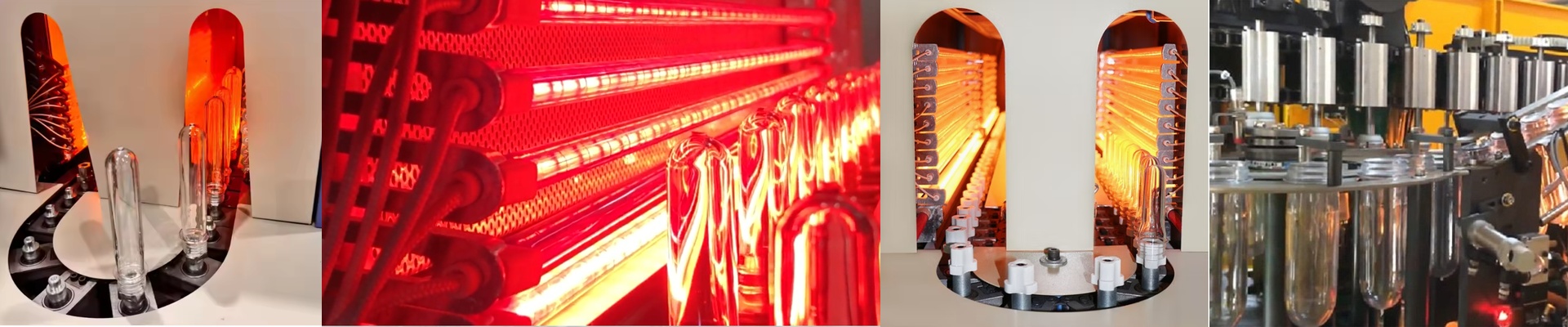
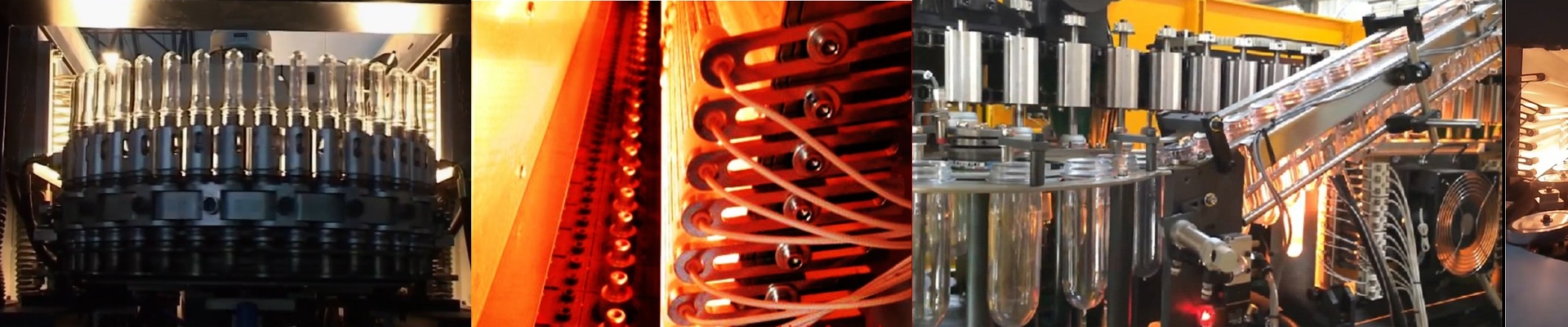
On the plant floor, your stretch blow molder is always moving. Vibration from the indexing table, conveyors, and clamps that cycle hard works its way right into the heating tunnel. That’s where standard halogen emitters fold. One broken quartz tube kills preform heating, and the line stops—until you swap the lamp, rebalance the zone, and write off the off-spec bottles. We built our shock-resistant IR radiator for exactly that kind of environment: a PET machine that runs hard and can’t afford a weak link in the heat. What matters, technically We run a short-wave infrared design with a reinforced quartz envelope built to take the shock load inside a blow molder. Inside, the filament support and a ruggedized base cut down on brittle fracture. The emitter is spec’d to match OEM heating-tunnel power density, so you can drop it in without retuning the whole zone. You’ll get stable output for 5,000+ hours, fast warm-up, and tight control of preform surface temperature—exactly what you need for consistent stretch and bottle weight. Standard terminations, including R7s connectors, fit Sidel, Krones, SIPA, Husky, SACMI, and Nissei ASB holders. Voltage options line up with common plant power. Why it holds up in blow molding Heating sets the pace. A solid IR radiator keeps the heating profile repeatable, so the blow station sees the same preform, cycle after cycle. That translates to fewer pinholes, less stress whitening, and fewer jams from underheated material. You also save on maintenance labor and spare inventory because this emitter survives the vibration that kills conventional lamps. Energy use stays sensible, too—short-wave IR heats the preform surface directly, so the tunnel runs cooler and waste heat stays low. The practical details Installation is straightforward, but alignment is everything. Even with a shock-resistant design, mount the emitter square in the reflector and confirm clearance so it can’t contact moving clamps or conveyor guides. Check your reflector geometry. If the reflector is worn, output will drift even with a strong lamp. And keep the lens and reflector clean—dust and bottle residue cut output faster than vibration ever will.