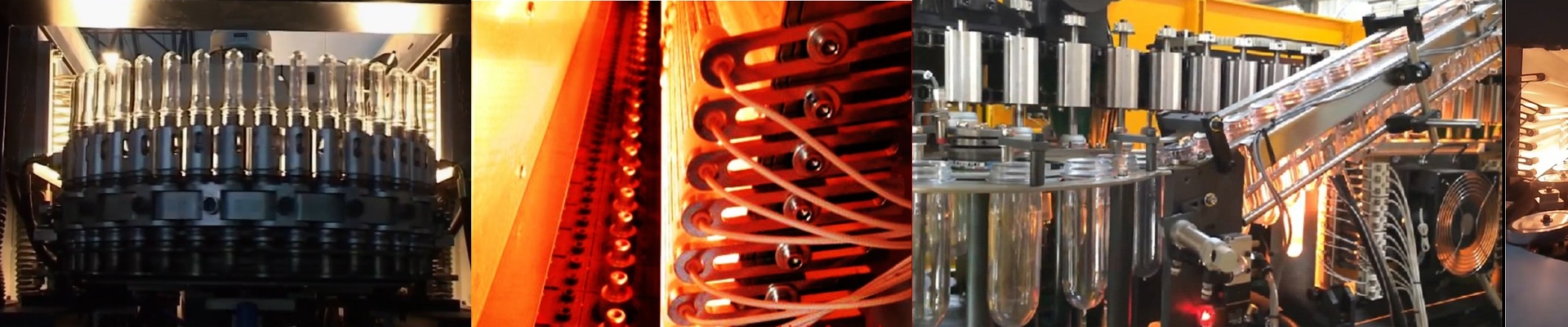
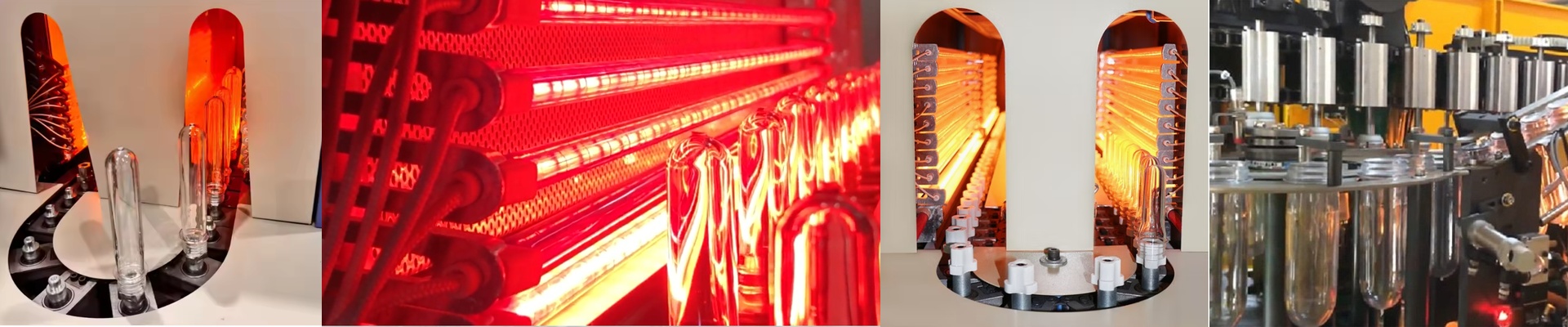
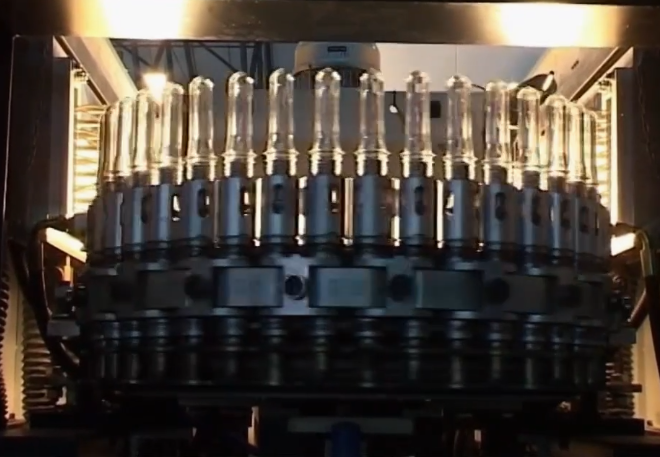
On the blow molding line, uneven preform heating quietly eats your uptime and your bottle quality. When the heating tunnel can’t hold setpoint consistently, you start seeing weak necks, blown parisons, and scrap that just keeps stacking up. We built our ceramic end cap infrared bulbs to solve that—because stretch blow molding is a brutal environment, and the heaters have to live in it. What matters, technically We run a high-purity quartz tube with a ceramic end cap, chosen for stable output and fast thermal response. The specs are matched to real blow molders: 240V/480V options, power densities tuned for PET, and standard R7s connectors so it drops in without a redesign. Short-wave output peaks around 1,000 nm, dumping focused energy into the preform wall without cooking the neck. We size the active length to your heating zone, so you get even temperature across the tunnel—no hot spots, no cold edges. Here’s what that translates to on the floor: faster recovery after jams, tighter temperature control, and more consistent bottle weight. You can run higher line speeds without chasing drift, and you’ll see energy use drop because the bulb heats on demand and cools quickly. On Sidel, Krones, SIPA, Husky, SACMI, and Nissei ASB machines, that means fewer rejects, less downtime, and maintenance intervals you can actually plan around. A couple of practical notes. These bulbs work with standard reflectors and mounting brackets, but reflector alignment has to be dead on. Even a few degrees off will throw the profile. And keep the tunnel clean—film buildup on the quartz cuts output fast. You can expect 5,000+ hours of stable output, but always match voltage and wattage to the socket. If your machine runs variable intensity, confirm dimming compatibility up front. Otherwise you’ll get flicker and you’ll shorten the bulb life.