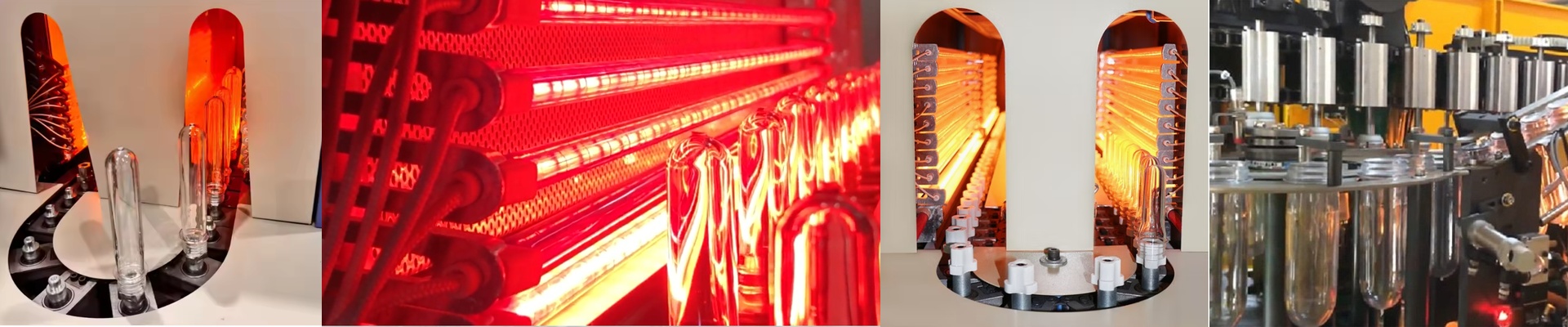
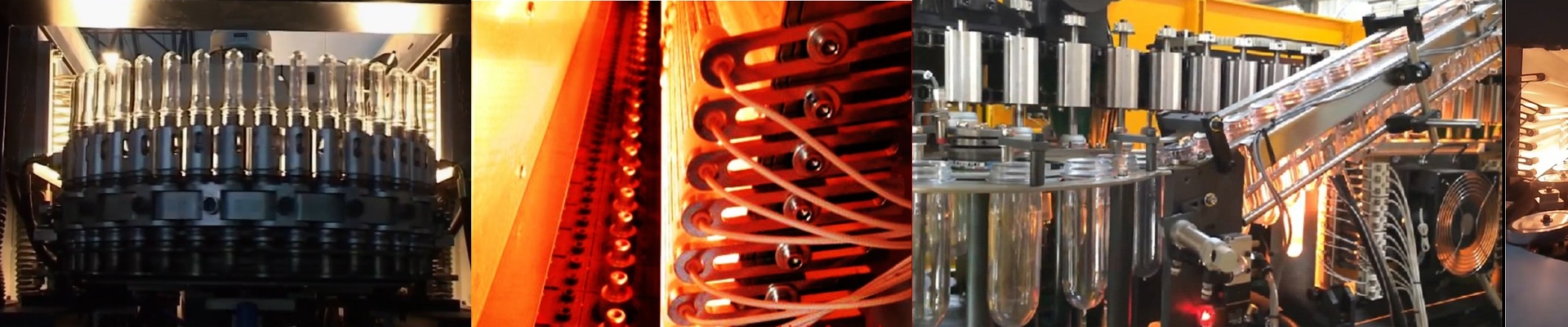
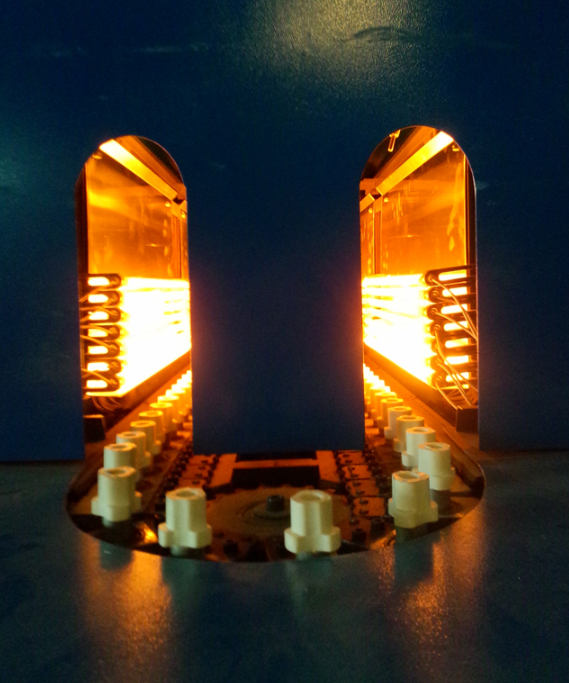
On the blow molding floor, uneven preform heating doesn’t just throttle line speed—it manufactures scrap. When the heating tunnel can’t hold setpoint across the neck and body, you end up with blisters, haze, and a weak biaxial stretch. The place to fix this is right at the emitter. What actually matters under the hood We built this IR radiator for PC/PETC around a short-wave quartz element, matched to how polyester and carbon-loaded blends absorb energy. It runs on 240V and comes in standard wattages from 800W to 1500W, so it drops straight into existing R7s sockets—no rewiring. The filament geometry is tuned to give you a tight focal band, so the heat lands where the preform needs it—neck finish, transition, and body—without scorching the surface. You get fast thermal response, stable output for 5,000+ hours, and repeatable temperature control inside the tunnel. Why it plays in the real world This emitter was engineered for blow molders—Sidel, Krones, SIPA, Husky, SACMI, and Nissei ASB. It follows OEM heating zone geometry, so you get uniform wall distribution and consistent bottle weight. The payoff: fewer pinholes, better clarity, and cycle times that don’t drift. Energy use drops because the element hits setpoint quickly and holds it with minimal oscillation. Replacement frequency goes down, too, which means less downtime and less spare inventory on the shelf. The stuff you learn the hard way Installation is straightforward, but alignment is everything. Set the focal distance to the preform path per your machine’s spec—even a small offset will create hot spots. Keep reflectors clean and watch for oxidation; when reflectors go dim, you lose output. And respect the operating envelope: the quartz element performs best in a dry, well-ventilated tunnel. In humid conditions, protect the lamp ends and sockets, and verify voltage stability. If the voltage is shaky, the filament gets stressed early.