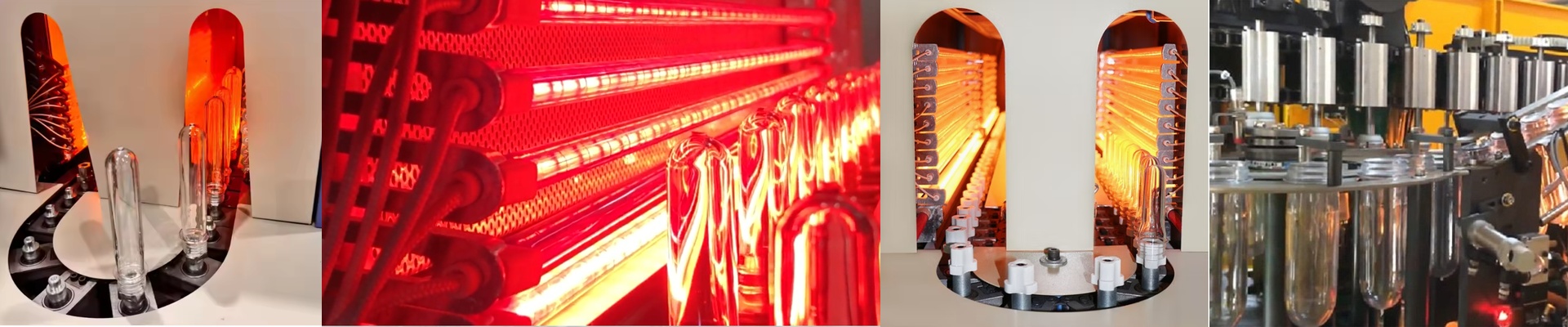
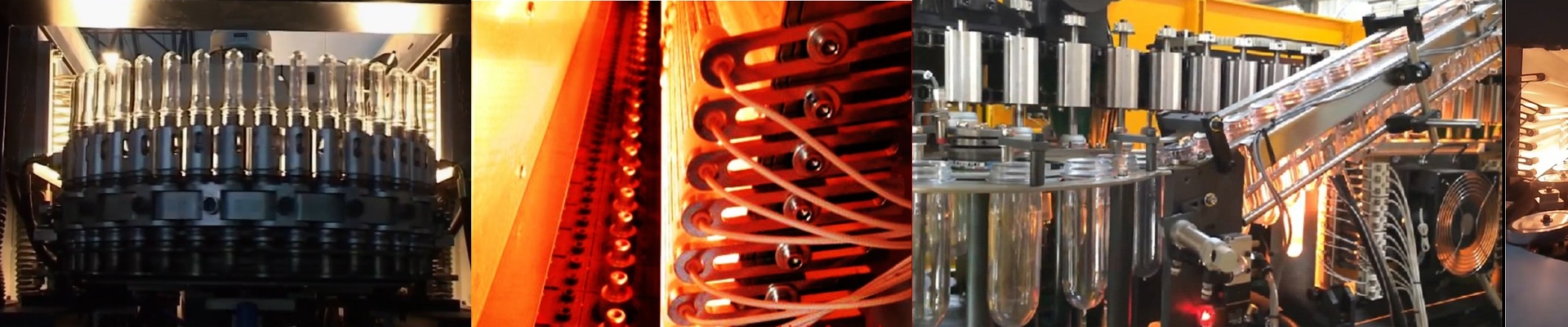
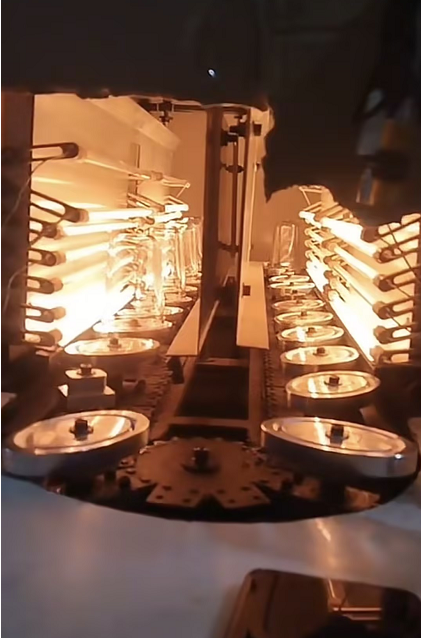
On the blow molding line, the heating tunnel is the pace setter. If preform temperature starts drifting, you know it right away—stretch marks, wall thickness that’s all over the map, and rejects that chip away at yield. Parker heater elements are built to keep that tunnel stable, day in and day out, on Sidel, Krones, SIPA, and other PET blow molders. What matters under the hood Parker elements run short-wave infrared halogen emitters in standard quartz tubes, so response is quick and thermal control stays tight. You’re looking at typical ratings from 100 to 4000 W, 120–240 V, with common R7s base connections for a direct retrofit. The geometry is engineered to match OEM heater assemblies, which keeps the heat profile right across the preform neck and body. Warm-up is fast, output stays consistent, and service life is meant to keep you running through long production stretches. Why it plays in stretch blow molding The temperature window in stretch blow molding is narrow. Parker elements put the heating curve back where it should be, so preforms hit the right temperature for even material distribution. You end up with fewer pinholes, better clarity, and bottle weight that holds steady. Energy draw per cycle drops, too, because the emitter switches off quickly and holds setpoint without overshoot. On the maintenance side, the form factor drops right in—no rewiring, no re-mapping. What to watch on install and changeover Installation is straightforward, but alignment is the make-or-break detail. If emitters are mounted off, you’ll get hot and cold spots that show up as hazing or weak seams. Double-check voltage and connector type, and inspect the reflector—reflector degradation will cut effective power even when the lamp still lights. Match the element to your preform wall thickness; thicker walls need longer dwell and a different heating strategy. Handle the lamps properly to avoid cracking the quartz, and run a temperature map after changeover.