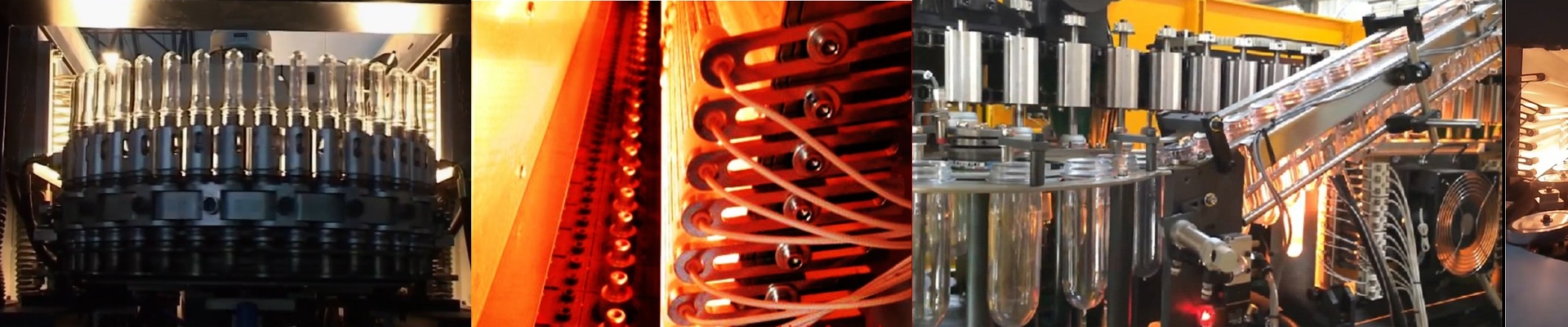
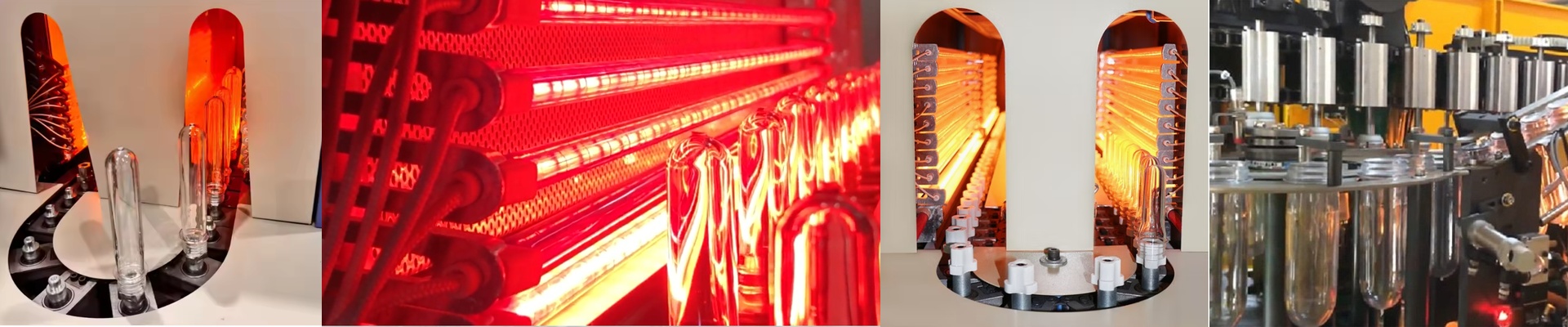
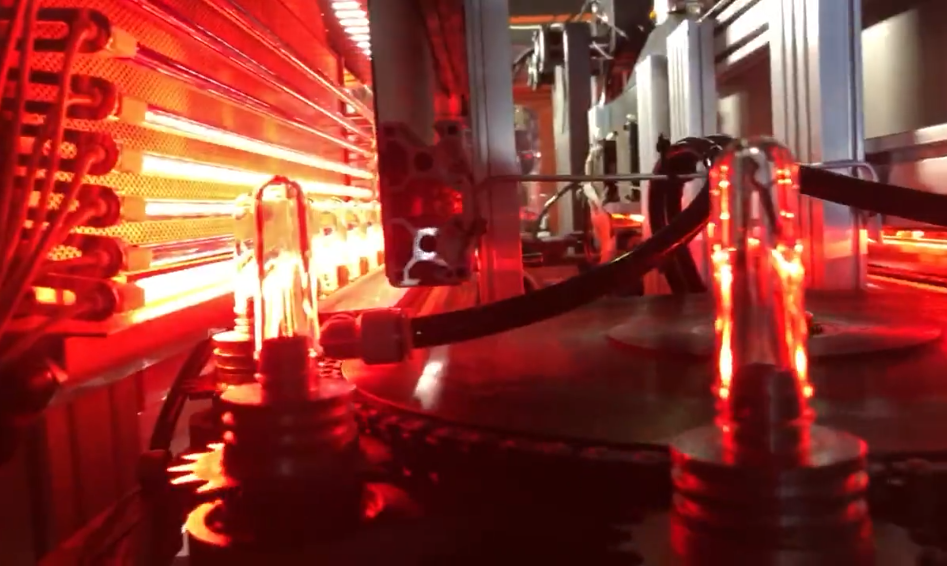
On the blow molding line, uneven preform heating doesn’t just slow you down—it shows up fast. In flash. In stress marks. In whole batches that get scrapped. If the heating tunnel can’t deliver repeatable energy, cycle after cycle, the whole line pays for it. What matters under the hood We build infrared emitters for blow molders using quartz halogen technology, chosen for quick response and stable output inside the heating tunnel. Each element is dimensioned to OEM spec—common lengths, R7s connector—so it drops straight into the existing holders without fiddling. Voltage and wattage match the machine’s original ratings, so power stays balanced across the heating zones. We control filament geometry and quartz wall thickness to keep output consistent as the element cycles on and off. That consistency is the difference when you’re running 24/7 and can’t afford any drift. Why this makes a difference on the floor With the right emitter, you get faster temperature recovery in the preform zone. That supports tighter timing on stretch blow molding and cuts the need to back off line speed just to protect quality. Energy use drops because the element hits setpoint quickly and holds it with less overshoot. Downtime drops too, because fewer elements fail mid-run. The units are dimensionally compatible with the major blow molding platforms—Sidel, Krones, SIPA, Husky, SACMI, Nissei ASB—so you can standardize performance across your fleet. The details that bite you if you ignore them Infrared elements are sensitive to airflow and reflector alignment. A reflector that’s even a little off can create hot spots and shorten service life. Install with clean contacts, verify voltage at the terminal, and make sure airflow in the heating zone is steady. And if you swap in a higher-wattage element to chase heat-up speed, you’ve got to re-check the wiring, fusing, and control tolerances. We supply OEM-matched ratings and application notes so the change stays safe and repeatable.