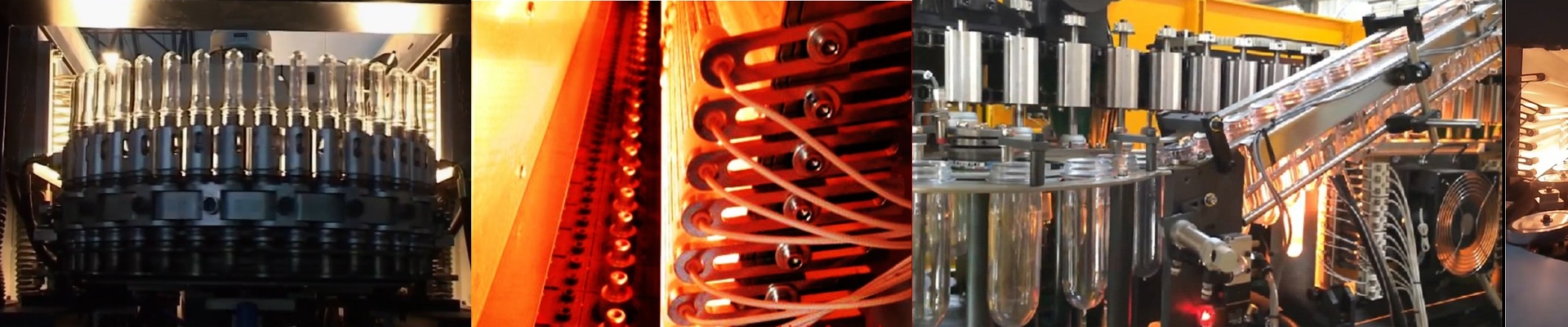
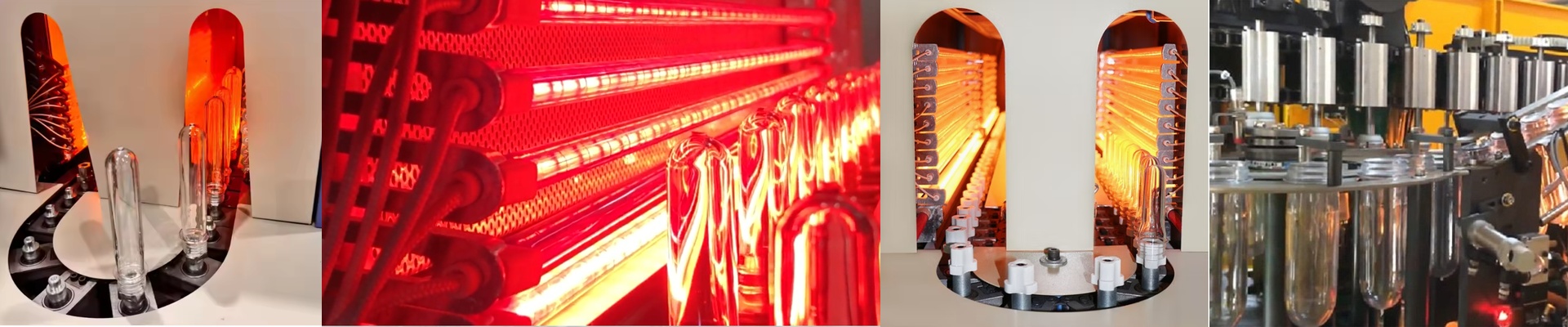
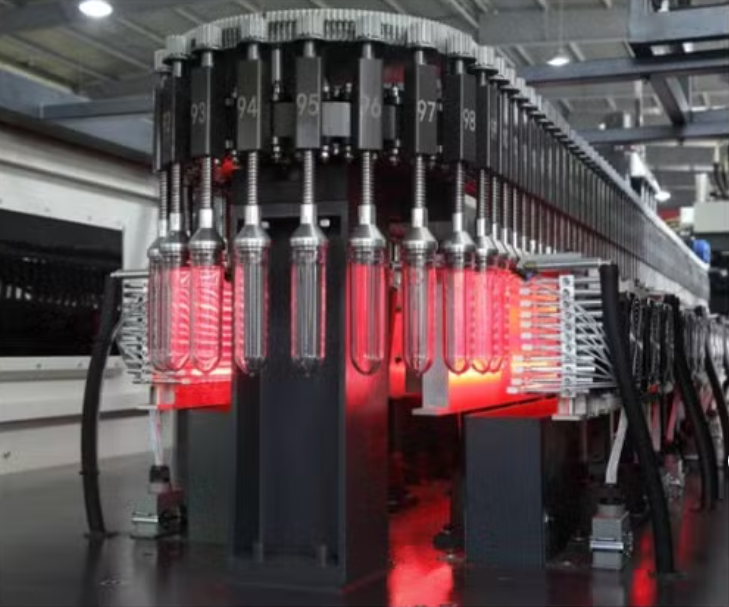
On the blow molding floor, the heating tunnel is where the whole run lives or dies. If the infrared heaters aren’t pulling their weight, preforms miss their temperature profile. The result? Off-spec bottles, scrap piling up, and the line stopping when you least want it to. On these machines, downtime isn’t measured in minutes — it’s measured in lost cycles. We supply industrial blow molding heater spares built to OEM standards so your stretch blow molding runs stay stable. What matters technically We build emitters for the reality of PET preform heating: short-wave infrared halogen elements, with quartz tubes for fast response and repeatable radiant output. We match OEM voltages, watt densities, and lamp geometry, including the common R7s connector interface, so power distribution and the temperature profile stay consistent. The materials are production-grade — high-temperature filaments, halogen gas fill, and quartz with controlled wall thickness to take the thermal shock. Every unit is measured against traceable calibration curves and run-tested to hold output stable over its service life. Why it works on your floor Dropped in as a direct replacement, these spares restore the intended heating curve on Sidel, Krones, SIPA, Husky, SACMI, and Nissei ASB blow molders. You get faster recovery from heat upsets, fewer rejects, and changeovers that behave the way they should. The fast-on response helps you hold tighter thermal tolerances across the preform wall, which supports consistent stretch ratios and bottle weight. Energy use stays in line because the emitters deliver the designed output without drift, keeping the heating tunnel balanced and avoiding the urge to over-power a zone. A few shop-floor reminders Infrared heaters are finicky about reflector alignment and clean surfaces — a little dust buildup is enough to throw the temperature profile off. Before ordering, verify lamp length, end type, wattage, and voltage, and check the socket itself. Corrosion and loose contacts are common failure points. For the cleanest results, replace emitters in matched sets per heating zone and re-tune the PID settings after the change.